
Warner Music China has signed a strategic partnership with Dream Maker, a virtual artist agency based in China.
The deal, announced on Friday (June 12), will see Warner Music China provide music production, distribution, marketing, and talent management support across Dream Maker‘s roster of virtual performers.
It marks the latest move in Warner Music China‘s expanding virtual artist strategy, one that gained global attention earlier this year when the label’s AI-powered virtual singer, Wu AI-Hua, went viral.
Dream Maker says it has developed more than 3,000 virtual singers, who have collectively amassed more than 10 billion video views across platforms.
The agency’s roster is led by virtual artists including KONG, DL. Ji, and DL. L9.
KONG, Dream Maker says, ranks No. 1 on Douyin‘s virtual category for both single-livestream viewership and revenue.
Unlike purely AI-generated performers, every Dream Maker virtual artist is powered by a real human performer working on a one-to-one basis, the company says, with real-time motion capture technology used to animate virtual avatars for livestreaming, live singing, and IP interactions.
According to the press release, the partnership will put “ethical safeguards at the heart of all their projects, so that human talent is protected”.
Human artists on Warner Music China‘s roster will also have the opportunity to feature on the virtual artists’ tracks, the companies said, “introducing them to new fans and experimenting with new sounds.”
Under the terms of the deal, Warner Music China will offer support across music planning, A&R production, copyright distribution, integrated marketing, talent management, and live performances.
A statement from the two companies said the partnership “goes beyond a simple cross-industry resource alignment” and “represents a deeper exploration into the commercial value and creative boundaries of virtual IPs.”
“Empowered by a professional music ecosystem, virtual artists will evolve beyond being mere online companions or interactive figures,” the Warner Music China statement added.
“Instead, they will have the opportunity to be heard and shared through fully realized musical projects and unique sonic identities.”
The Dream Maker deal follows the arrival earlier this year of virtual singer Wu AI-Hua on the Warner Music China roster, in a collaboration with the character’s creator, Chinese new-media artist Wu Zhiqi.
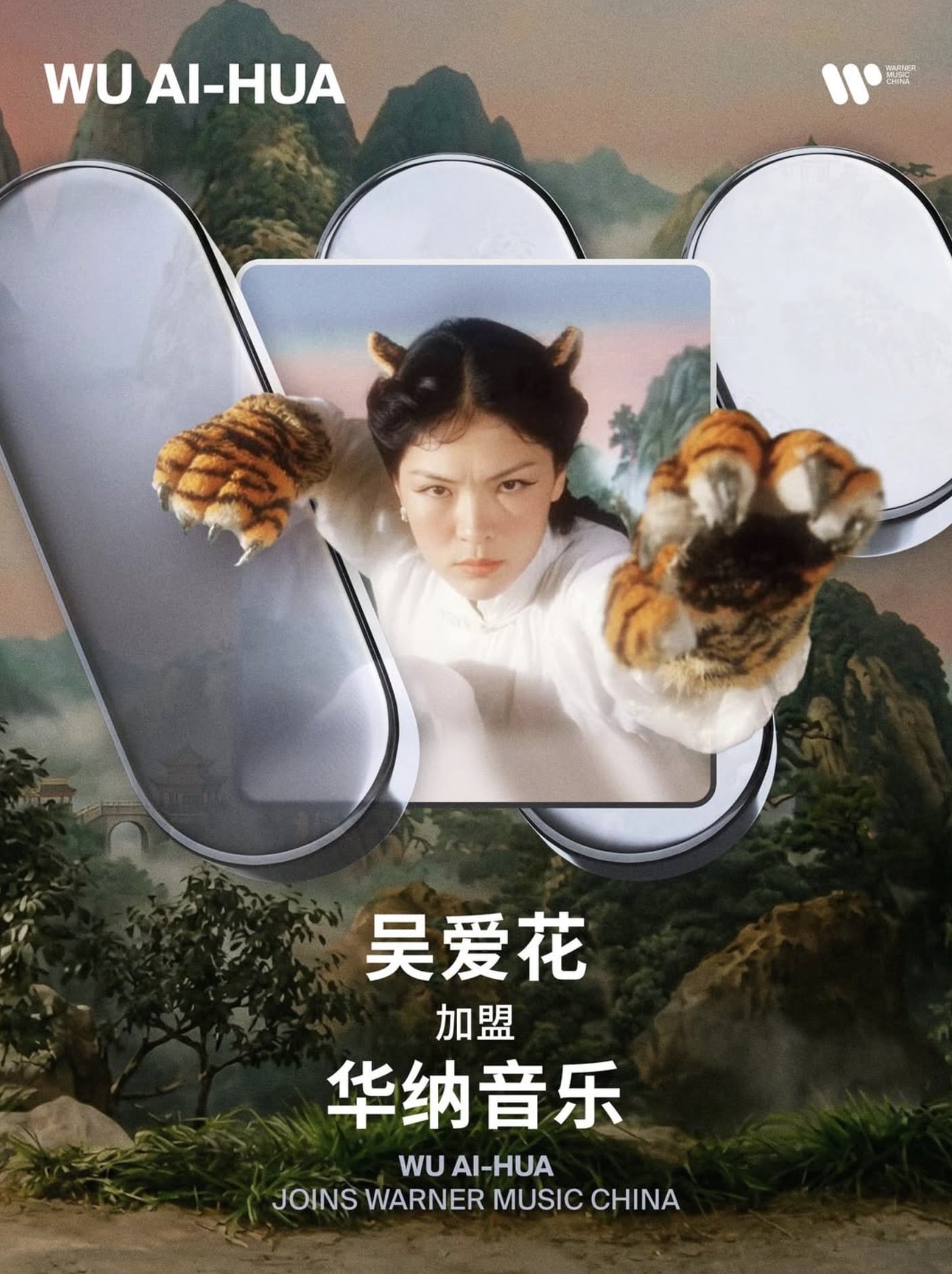
Promotional artwork from the label framed the move as Wu AI-Hua joining Warner Music China, in a project that attracted attention both in China and internationally.
Wu AI-Hua’s debut music video, released in January, surpassed 10 million views across platforms.
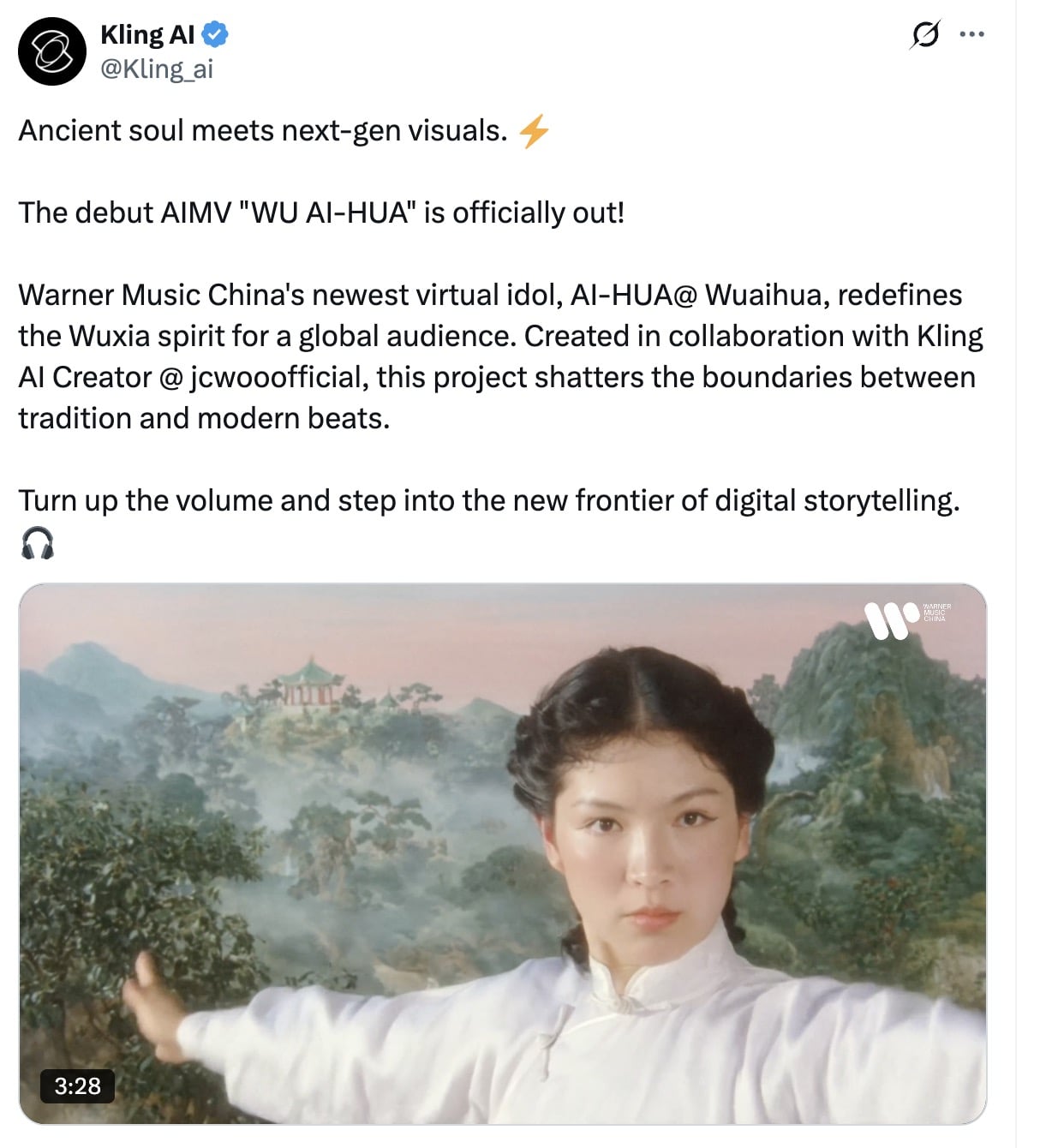
Rather than adopting the hyper-futuristic aesthetic typical of many virtual performers, Wu AI-Hua draws visual inspiration from 1960s–80s Hong Kong wuxia cinema: grainy textures, dramatic lighting, and a deliberately retro filmic atmosphere.
Sonically, however, the project pivots in the opposite direction: Wu AI-Hua sings in English, over tracks that blend EDM and hip-hop with the tension of traditional Chinese instruments.
The project’s visuals appear to have been produced using Kling AI, the video generation model developed by Chinese tech company Kuaishou, according to the debut video’s official description, which credits Wu Zhiqi as a “Kling AI Creator.”
Although Wu AI-Hua is presented as an AI character, her voice isn’t entirely machine-made. Bandwagon Asia reports that her vocals were “manually post-processed by human producers,” which it notes is “a hybrid production approach rather than fully automated AI music generation”.
“If she sang in Chinese, everything would be too seamless, perhaps even predictable,” Wu Zhiqi told China Daily in a February interview, on the decision to use English-language vocals.
“The English vocals provide a sensory counterpoint to the wuxia visuals.
“I’m looking for that aesthetic friction – a clash between ancient imagery and a modern, global sound – to give the character a more complex, multidimensional texture.”
The single’s official credits list Wu Zhiqi as composer, lyricist and producer alongside arrangers, a vocal producer and a mixer.
“AI isn’t magic,” Wu Zhiqi said. “It’s difficult. You need judgment, taste, and knowledge. Otherwise, nothing works.”
Warner Music China said in January that it plans to “leverage our global resources and industry expertise to systematically advance Wu AI-Hua’s multilingual music creation, international distribution, and cross-cultural collaborations.”
Elsewhere in the virtual artist space in China, in 2021, Warner’s pan-Asian dance label Whet Records signed virtual idol Ha Jiang – a deal that, at the time, was described as the first of its kind between a major record company and a virtual artist in Asia.
All three of the major music companies have since invested in virtual artist projects.
Sony Music Entertainment (Japan), for example, operates virtual talent agency VEE Virtual Entertainment – which it calls “the largest virtual talent development and management project in history” – and ran the PRISM Project VTuber agency, which signed multiple generations of virtual talent.
The Dream Maker partnership, however, represents a shift in scale for Warner Music China, moving from individual virtual artist signings to a systematic tie-up with a company that claims a roster of thousands.Music Business Worldwide
Warner Music China has recently forged a strategic partnership with Dream Maker, a prominent virtual artist agency based in China. Announced on June 12, this collaboration aims to enhance the music production, distribution, marketing, and talent management capabilities for Dream Maker’s diverse roster of virtual performers. This partnership is a significant step in Warner Music China’s expanding strategy in the virtual artist landscape, which gained global attention earlier this year with the viral success of its AI-powered virtual singer, Wu AI-Hua.
Dream Maker boasts an impressive portfolio of over 3,000 virtual singers, who collectively have garnered more than 10 billion views across various platforms. The agency is particularly known for leading virtual artists like KONG, DL. Ji, and DL. L9, with KONG holding the top position on Douyin’s virtual category in terms of both livestream viewership and revenue. Unlike purely AI-generated performers, Dream Maker emphasizes that each of its virtual artists is animated by real human performers using real-time motion capture technology. This technology allows for live interactions, singing, and performances, enhancing the authenticity and engagement of the virtual experience.
The partnership between Warner Music China and Dream Maker is designed with ethical considerations in mind, ensuring that human talent is protected in all projects. Moreover, Warner Music China’s human artists will also have opportunities to collaborate with these virtual performers, potentially introducing them to new audiences and exploring innovative musical styles.
Under the terms of the agreement, Warner Music China will provide a comprehensive suite of support, including music planning, A&R production, copyright distribution, integrated marketing, talent management, and live performance coordination. The companies have stated that their collaboration transcends simple resource alignment and aims to explore the commercial potential and creative boundaries of virtual intellectual properties (IPs).
This partnership signifies a shift in the industry, as virtual artists are envisioned to evolve beyond mere online companions. Warner Music China believes that with the backing of a professional music ecosystem, virtual artists can become fully realized musical entities with unique sonic identities, rather than just interactive figures.
The collaboration follows the earlier introduction of virtual singer Wu AI-Hua to Warner Music China’s roster, which was launched in collaboration with her creator, the new-media artist Wu Zhiqi. Wu AI-Hua’s debut music video, released in January, quickly surpassed 10 million views, garnering significant attention both in China and globally. Unlike many virtual performers that adopt a hyper-futuristic aesthetic, Wu AI-Hua draws inspiration from 1960s–80s Hong Kong wuxia cinema, featuring grainy textures and dramatic lighting, creating a nostalgic atmosphere.
Musically, Wu AI-Hua presents a fusion of English-language vocals with EDM and hip-hop influences, complemented by traditional Chinese instruments. The visuals of her debut video were reportedly generated using Kling AI, a video production model from the Chinese tech company Kuaishou. Despite being marketed as an AI character, Wu AI-Hua’s vocals underwent human post-processing, indicating a hybrid production approach rather than fully automated music generation.
Wu Zhiqi, the creator, emphasized the importance of this hybrid approach, stating that “AI isn’t magic” and requires human judgment, taste, and knowledge to be effective. The decision to use English vocals was intentional, creating an aesthetic friction between the ancient imagery and a modern sound, which adds depth to the character.
Warner Music China has expressed its intent to leverage global resources to systematically advance Wu AI-Hua’s multilingual music creation, international distribution, and cross-cultural collaborations. This focus aligns with a broader trend in the industry, where major music companies are increasingly investing in virtual artist projects.
In 2021, Warner’s pan-Asian dance label Whet Records signed the virtual idol Ha Jiang, marking one of the first major deals between a record company and a virtual artist in Asia. Other major music companies, such as Sony Music Entertainment Japan, have also entered the virtual artist space, with initiatives like VEE Virtual Entertainment and the PRISM Project VTuber agency.
The Dream Maker partnership represents a significant escalation in Warner Music China’s commitment to virtual artists, transitioning from individual signings to a strategic alliance with a company that has a vast roster of virtual talent. This move positions Warner Music China at the forefront of the rapidly evolving virtual artist landscape, promising exciting developments for both the company and the virtual performers it supports.