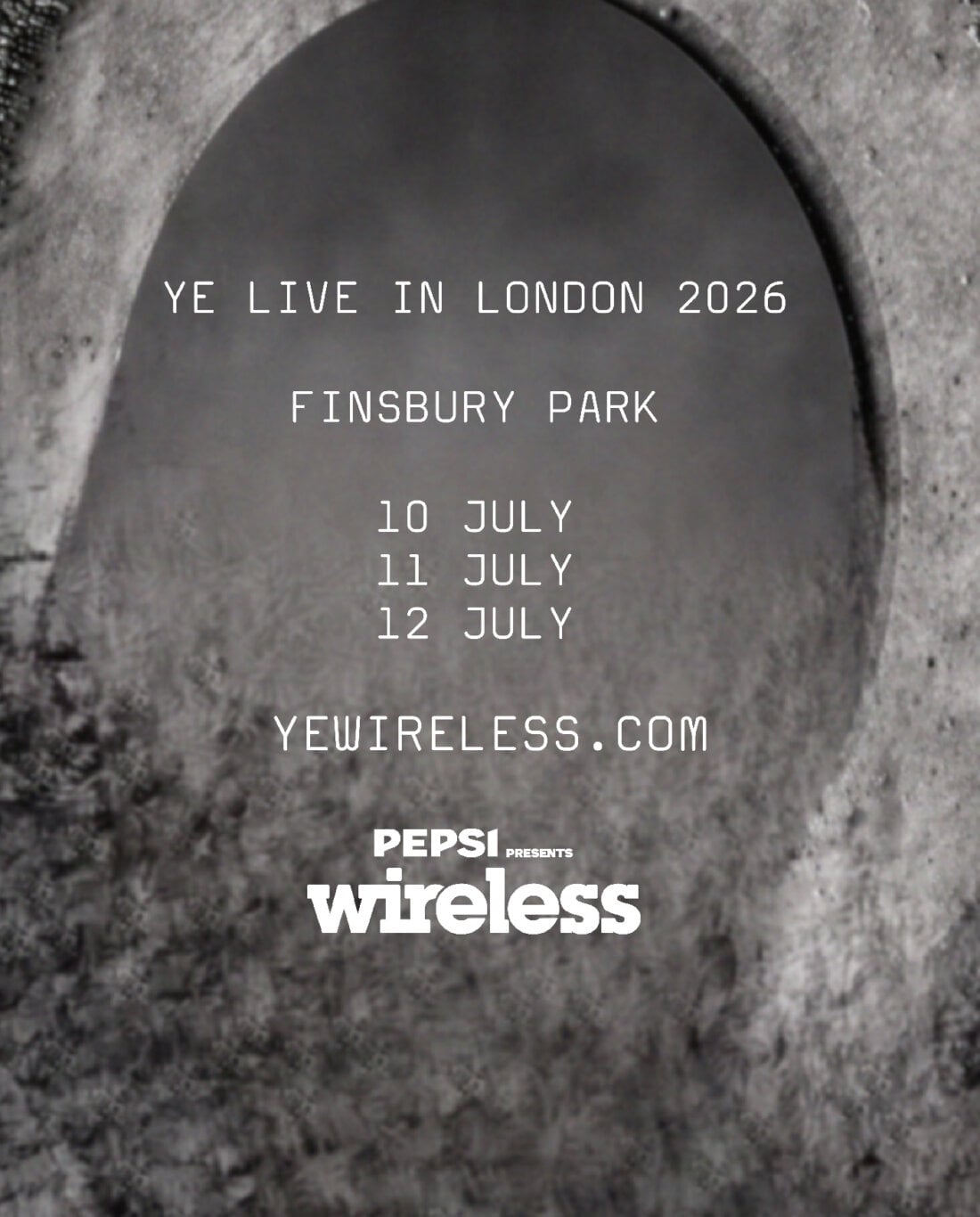

Pepsi and Diageo have withdrawn their sponsorship of London’s Wireless Festival following a wave of political condemnation over the event’s decision to book Ye (formerly Kanye West) as its sole headliner for all three nights this summer.
Pepsi, which had served as the festival’s headline sponsor since 2015 under the branding “Pepsi MAX Presents Wireless,” confirmed its withdrawal on Sunday (April 5). “Pepsi has decided to withdraw its sponsorship of Wireless Festival,” the company said in a statement.
Hours later, spirits giant Diageo — parent company of the Johnnie Walker and Captain Morgan brands — followed suit. “We have informed the organizers of our concerns, and as it stands, Diageo will not sponsor the 2026 Wireless festival,” said a company spokesperson.
The sponsorship withdrawals came after Ye was announced on Monday (March 30) as the headliner of all three nights of Wireless 2026, scheduled for July 10–12 at Finsbury Park in north London. The booking was billed as a “three-night journey through his most iconic records,” and marked the first time no other headliners were announced alongside him. Ticket presales were due to begin on Tuesday (April 7) via Ticketmaster, with general on-sale the following day.
The announcement drew swift criticism from senior UK political figures. Prime Minister Keir Starmer, in a statement to The Sun, said: “It is deeply concerning Kanye West has been booked to perform at Wireless despite his previous antisemitic remarks and celebration of Nazism.
“Antisemitism in any form is abhorrent and must be confronted firmly wherever it appears. Everyone has a responsibility to ensure Britain is a place where Jewish people feel safe.”
London Mayor Sadiq Khan distanced City Hall from the booking on Wednesday (April 1). “We are clear that the past comments and actions of this artist are offensive and wrong, and are simply not reflective of London’s values,” said a spokesperson for the Mayor. “This was a decision taken by the festival organizers and not one that City Hall is involved in.”
Liberal Democrat leader Ed Davey went further on Thursday (April 2), calling for Ye to be banned from entering the UK altogether. “We need to get tougher on antisemitism,” he said.
The Jewish Leadership Council called the booking “deeply irresponsible” in a statement to The Guardian, adding: “West has repeatedly used his platform to spread antisemitism and pro-Nazi messaging … Any venue or festival should reconsider before providing their platform to Kanye West to spread his antisemitism.”
With Pepsi and Diageo now out, attention has turned to the festival’s remaining sponsors. As of Sunday evening, PayPal, Budweiser and Beatbox were among those yet to issue a response. Rockstar Energy Drink, which is owned by PepsiCo in the UK, is also expected to withdraw, though this had not been confirmed at the time of writing.
Background
There also remains the question of whether Ye will be granted permission to enter the UK. As a US citizen, he would require clearance to perform. Australia revoked his visa in July 2025 after he released a track titled Heil Hitler in May of that year, with the country’s Home Affairs Minister saying the government would not “deliberately import bigotry.”
The 48-year-old published a full-page apology in The Wall Street Journal in January, attributing his behavior to a “four-month-long manic episode of psychotic, paranoid and impulsive behavior” linked to a brain condition. He has yet to make any public statements of contrition in anything other than written form.
Wireless is organized by Festival Republic, a subsidiary of Live Nation Entertainment. The festival had positioned Ye as its only announced act ahead of ticket on-sale, following Drake‘s three-night headline residency at the event in 2025. Ye last performed in the UK at Glastonbury in 2015.
The corporate exodus around Ye echoes the 2022 wave of partnership terminations that followed his antisemitic remarks, when Adidas, creative agency CAA, and others severed ties with the artist. Adidas said at the time that it expected the immediate termination of its Yeezy partnership to have a negative impact of up to €250 million on the company’s net income.
Live Nation, whose UK festival portfolio accounts for over 25% of UK festivals with a capacity above 5,000, according to data from the Association of Independent Festivals, has faced scrutiny over its market dominance in the country’s live sector. The company’s CEO, Michael Rapino, told investors late last year that he expected 2026 to be “back to kind of a normalized year across all of our platforms” following what he described as a “digestion” period in 2025.
Festival Republic had not issued a public response to the sponsor withdrawals at the time of writing.Music Business Worldwide
Pepsi and Diageo have officially withdrawn their sponsorship of the Wireless Festival in London due to backlash over the booking of Ye (formerly known as Kanye West) as the sole headliner for all three nights of the event scheduled for July 10-12, 2026. This decision was announced after Ye’s controversial history, including his antisemitic remarks and admiration for Nazism, sparked significant political condemnation.
Pepsi, the festival’s headline sponsor since 2015, confirmed its withdrawal in a statement released on April 5, stating, “Pepsi has decided to withdraw its sponsorship of Wireless Festival.” Shortly after, Diageo, the parent company of brands like Johnnie Walker and Captain Morgan, announced they would not sponsor the festival either, citing concerns over Ye’s past actions and statements.
The controversy ignited when Ye was announced as the only headliner for the festival, described as a “three-night journey through his most iconic records.” This marked a departure from previous years where multiple headliners were featured. Ticket presales were scheduled to begin on April 7, 2026, but the backlash prompted immediate scrutiny.
Political leaders quickly voiced their concerns. Prime Minister Keir Starmer expressed deep alarm at Ye’s booking, condemning antisemitism and emphasizing the responsibility to ensure a safe environment for Jewish individuals in the UK. London Mayor Sadiq Khan also distanced City Hall from the decision, noting that the artist’s past comments were offensive and did not reflect the values of London. Additionally, Liberal Democrat leader Ed Davey advocated for a ban on Ye’s entry into the UK, stressing a need for stricter measures against antisemitism.
The Jewish Leadership Council issued a statement characterizing the booking as “deeply irresponsible,” highlighting that Ye has consistently used his platform to propagate antisemitic and pro-Nazi views. They urged venues and festivals to reconsider any platform given to him.
In light of Pepsi and Diageo’s withdrawals, attention shifted to the remaining sponsors of the festival, including PayPal, Budweiser, and Beatbox, who had yet to respond publicly. There was also speculation regarding Rockstar Energy Drink, owned by PepsiCo in the UK, potentially following suit.
Additionally, questions arose about whether Ye would be allowed to enter the UK to perform. As a US citizen, he requires clearance for entry. Previously, his visa was revoked by Australia in 2025 after he released a song titled “Heil Hitler,” with officials stating they would not “deliberately import bigotry.” Ye had issued a public apology in January 2026, attributing his behavior to a “four-month-long manic episode” related to a brain condition, but had not expressed contrition publicly beyond written statements.
The Wireless Festival is organized by Festival Republic, a subsidiary of Live Nation Entertainment, which has faced scrutiny regarding its dominance in the UK live music sector. In light of the controversy, there has been no public response from Festival Republic regarding the withdrawal of sponsorships.
This situation reflects a broader pattern of corporate backlash against Ye, reminiscent of the 2022 wave of sponsorship terminations following his antisemitic remarks, when companies like Adidas and CAA severed ties with him, resulting in significant financial impacts. Live Nation, which controls a substantial portion of the UK festival market, has also had to navigate these challenges while trying to maintain its position in the industry.
The unfolding events underscore the complex intersections of music, corporate sponsorship, and social responsibility, as the festival organizers and remaining sponsors grapple with the implications of allowing controversial figures to headline major events. The Wireless Festival, with its history and significant audience, stands at a crossroads as it faces the repercussions of its decisions and the evolving landscape of public sentiment regarding artists and their past behaviors.