

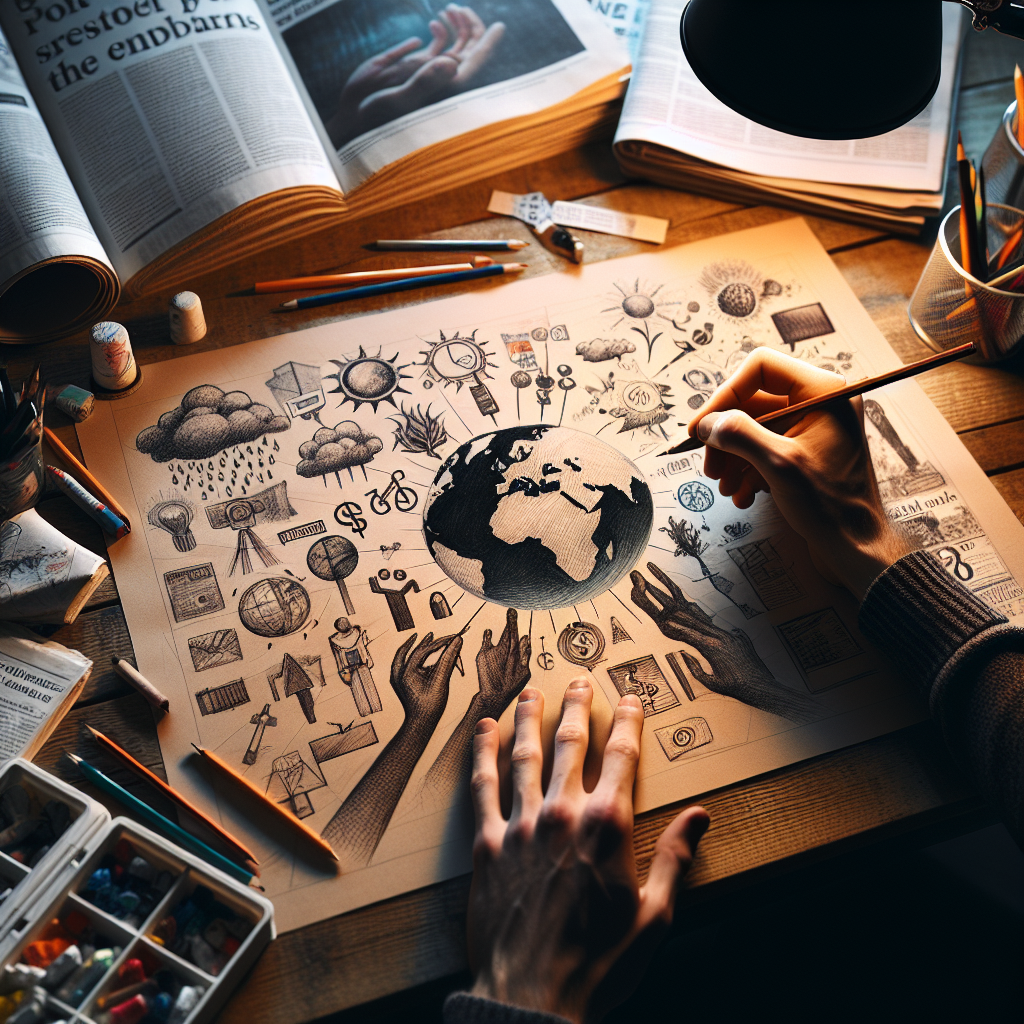
In an age where information is abundant and opinions are diverse, caricature has emerged as a powerful medium for conveying complex societal issues in a digestible and often humorous format. This unique art form has a rich history, blending artistry with sharp commentary, and continues to resonate in contemporary discourse. Through exaggerated illustrations and satirical portrayals, caricature serves as a magnifying glass, offering insights into the zeitgeist while illuminating the truths that define our collective experience.
The Art of Caricature: A Historical Perspective
Caricature dates back centuries, with early examples found in ancient Rome and medieval Europe. The term itself derives from the Italian word "caricare," meaning to load or exaggerate. Artists like Honoré Daumier and George Cruikshank became notorious for their biting critiques of political leaders and social norms through exaggerated illustrations. These early caricaturists laid the groundwork for what would become a vital form of social commentary.
As we progressed into the 20th and 21st centuries, caricature evolved alongside technological advancements and sociopolitical changes. The introduction of mass media — from newspapers to online platforms — broadened the reach of caricature, allowing incisive commentary to reverberate across borders.
Caricature in the Digital Age
In today’s digital landscape, caricature has found new life on social media platforms, where a single illustration can capture the imagination of millions in seconds. Artists like Ted Rall and Steve Bell have leveraged platforms such as Twitter and Instagram to share their takes on current events, engaging younger audiences and reinvigorating political discourse. Humor, wit, and sarcasm often take center stage, allowing caricature to address serious topics like climate change, social justice, and political corruption without the heaviness of traditional journalism.
The Power of Humor
Humor is a fundamental component of caricature. By employing exaggeration and absurdity, caricaturists create a safe space for audiences to confront uncomfortable truths. For instance, during contentious election cycles, caricatures depicting candidates can highlight inconsistencies in their platforms or expose hypocrisy in a way that traditional news may not. The humor in these illustrations often allows for a more engaging exploration of complex subjects, making them more palatable for the general public.
Moreover, humor can serve as a psychological defense mechanism. In uncertain times, laughter can alleviate stress and foster a sense of connection. Caricature, by presenting the absurdity of certain situations, helps audiences make sense of a chaotic world, fostering a shared experience of both frustration and amusement.
Critique, Controversy, and Cultural Reflection
While caricature possesses the ability to entertain, it also invites critique. Many caricaturists grapple with the fine line between satire and offense, as exaggerated features or particular themes can inadvertently perpetuate stereotypes or stigmas. As artists strive to reflect societal truths, they must remain conscious of cultural sensitivities, especially in our increasingly globalized world.
Nonetheless, caricature plays a pivotal role in challenging authority and prompting dialogue. Documenting protests, political scandals, and injustices, caricaturists often serve as the voice of the voiceless. Their work can galvanize public opinion and inspire action, illustrating the power of art as a tool for social change.
Capturing the Pulse of Current Events
In essence, caricature reflects the pulse of current events. Whether it’s a global pandemic, civil rights movements, or environmental crises, caricaturists wield their pencils to sketch the complexities of our reality. They distill multifaceted issues into striking imagery that resonates with audiences, reminding us that art and activism can coexist.
Moreover, caricature invites audiences to question their beliefs, encouraging critical thinking and engagement. It enables us to explore our own positions within the broader narrative, ultimately fostering a more informed and active citizenry.
Conclusion: The Future of Caricature
As we navigate an increasingly polarized world, the relevance of caricature continues to grow. Whether through ink on paper or digital illustrations, caricatures remain an essential form of expression, reflecting societal truths while challenging the status quo.
In the hands of skilled artists, caricature becomes more than mere entertainment; it is a lens through which we can examine ourselves and the world around us. In a time when truth can often feel elusive, caricature sketches a much-needed line to our shared human experience, reminding us that laughter and reflection can coexist, even in the most tumultuous of times.

