

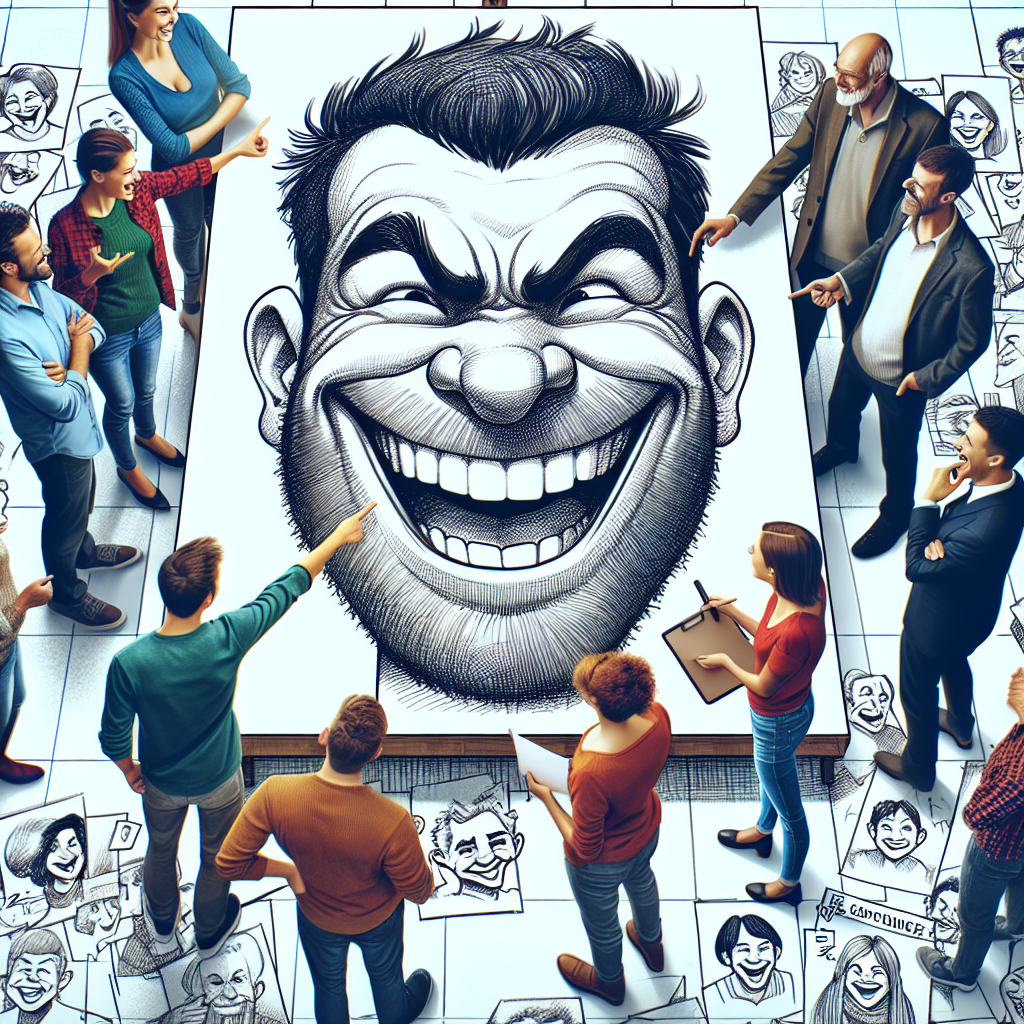
In a world rife with complexities, caricature serves as a potent tool for social commentary, using humor and exaggeration to reveal deeper truths about society. This art form, characterized by its playful distortion of reality, invites audiences to laugh while simultaneously prompting reflection on socio-political issues, cultural norms, and human behavior.
The Art of Caricature
Caricature has its roots in the Italian Renaissance, where artists like Annibale Carracci began to distort the features of their subjects in order to evoke humor or critique. Over time, it evolved into a form of social and political commentary that can encapsulate the zeitgeist of an era. Caricature strips down complexities, exposing the essence of people and situations through a lens of exaggeration and satire.
This art form thrives on the concept of the absurd, employing exaggerated physical traits or quirky behavior to amplify flaws and idiosyncrasies, thus enabling the audience to see familiar faces and personalities in a new light. The emotional response elicited by caricature can be immediate; laughter often acts as the entry point for deeper engagement with the subject matter.
Humor as a Reflection Tool
Laughter possesses a unique power—it disarms, connects, and opens up space for dialogue. When artists create caricatures, their intention often transcends entertainment. By invoking humor, they draw audiences into conversations about serious topics that might otherwise feel inaccessible or uncomfortable. The irony, wit, and absurdity inherent in caricature provide the perfect vehicle for individuals to reflect on society’s shortcomings, injustices, or contradictions.
Consider the realm of political caricature, where public figures are often depicted with exaggerated features that symbolize their perceived qualities or failings. Through humor, these caricatures enable communities to engage in critical thought about political decisions, ethics, and governance without the heavy weight of direct confrontation. This kind of commentary not only sheds light on specific issues but also creates a sense of camaraderie among individuals, as laughter becomes a shared experience.
Historical Context
Throughout history, caricature has played a crucial role in the discourse surrounding power and authority. In the 18th century, the visionary cartoonist James Gillray used his craft to comment on the political landscape of England, lampooning figures such as King George III and Napoleon Bonaparte. His exaggerated portrayals not only entertained but also bolstered public sentiment against what many considered to be tyrannical rule.
Similarly, in the 20th century, artists like David Levine captured the essence of political figures through caricature, providing a social critique that reached millions through magazines and newspapers. These caricatures often paved the way for social movements by highlighting issues such as civil rights, war, and inequality, thereby encouraging audiences to question the status quo.
The Modern Era of Caricature
In today’s digital age, the influence of caricature has expanded through social media platforms. The immediacy with which caricatures can be shared and disseminated has only amplified their role in social commentary. Memes, often rooted in caricature, are now ubiquitous, echoing political sentiments and societal critiques. Artists like Matt Groening (creator of "The Simpsons") and editorial cartoonists use their platforms to comment on contemporary issues, reinforcing the idea that caricature remains a vital means of expression.
However, with this amplification comes responsibility. The potential for misunderstanding or misrepresentation increases, and caricature can sometimes perpetuate harmful stereotypes. Artists must navigate these complexities thoughtfully, ensuring that their work remains a force for positive change rather than division.
Conclusion
Caricature stands as a testament to the power of laughter in revealing truths about ourselves and our societies. It reminds us that, while we may face serious challenges, there is space for humor as a catalyst for reflection and discourse. In a time characterized by polarization and tension, the ability of caricature to foster connection through shared laughter provides hope for understanding and dialogue. As we continue to engage with this art form, let us remain mindful of its potential—both to entertain and to inspire change. Through the lens of caricature, we can engage in a collective reflection on the world we inhabit, illuminated by a smile and a critical eye.

