

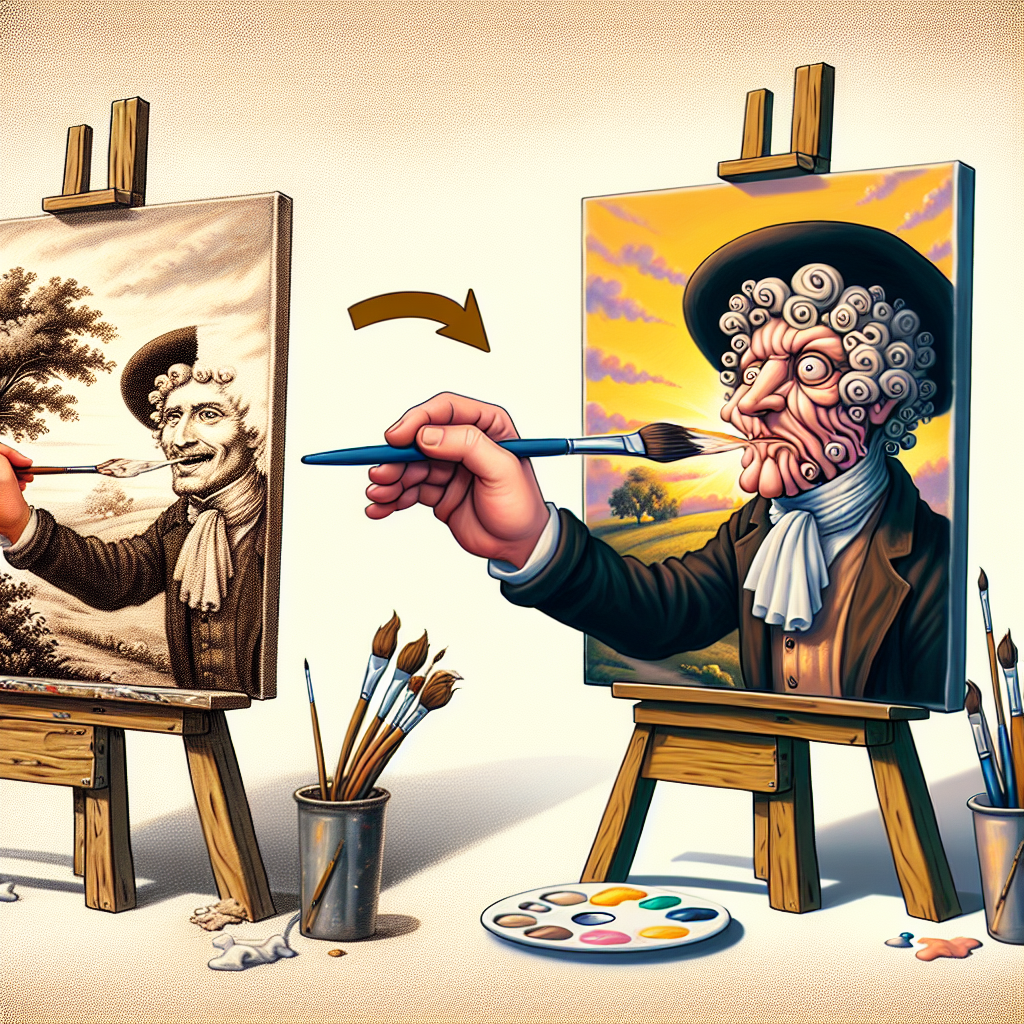
Caricature art, often seen as a playful exaggeration of the human form, has roots that intertwine with profound social commentary and artistic innovation. This unique art form has evolved through centuries, transforming from serious portraiture into a lively medium that blends humor, satire, and reflection on society.
Historical Foundations
The origins of caricature can be traced back to ancient civilizations, with early examples found in the art of the Egyptians and Romans, who often depicted figures in exaggerated ways for comedic effect. However, the term "caricature" itself began to take shape in the 16th century, particularly in Italy. Artists like Annibale Carracci played a crucial role in the development of caricature as we know it today, distorting features to make insightful commentary on cultural and social issues of their time.
The Rise in Popularity
The 18th century saw a significant increase in the popularity of caricature, especially in Europe. This period was marked by the works of artists like James Gillray and George Cruikshank in England, who used the exaggeration of human features to critique societal norms, politics, and personalities. Their sharp wit and humor made their work immensely popular, and caricature became an essential form of political satire, often distributed through printed pamphlets and newspapers.
Gillray’s illustrations targeted politicians, monarchs, and social figures, making them accessible to the masses. Through humor and absurdity, caricature allowed people to engage with politics in a way that was both entertaining and thought-provoking.
The Artistic Transition
As the 19th century progressed, caricature became more sophisticated, influenced by advancements in lithography and printing technologies. Artists like Honoré Daumier and Thomas Nast perfected the art form, using it as a vehicle for social justice. Daumier’s work often highlighted the struggles of the working class, while Nast became known for his depictions of political corruption in the United States.
During this time, caricature began to seep into other art forms and cultures, notably in the realm of theater and visual arts. The evolution of caricature intersected with various movements, including Impressionism and Surrealism, as artists experimented with abstraction and exaggerated forms.
The Modern Era: Caricature in the Digital Age
The advent of the 20th century brought new challenges and innovations for caricature artists. The rise of mass media, television, and eventually the internet changed the landscape significantly. Caricature began to diversify even further, tailoring itself to varied platforms—from editorial cartoons to animated series.
Today, social media has transformed the way caricature is created and consumed. Platforms like Instagram and Twitter have provided a stage for contemporary artists to explore personal and social themes with immediacy and engagement. Artists like Jason Seiler and Mike Dierssing use digital tools to create striking caricatures that are shared globally, sustaining the tradition’s relevance in popular culture.
Caricature as a Reflection of Society
Throughout its evolution, caricature has remained a mirror reflecting societal changes. The exaggerated features of its subjects often reveal truths about human nature, power dynamics, and cultural standards. In the face of global issues such as climate change, societal inequality, and political unrest, modern caricature serves as both commentary and catharsis, inviting audiences to chuckle while provoking critical thought.
Conclusion
From its historical roots to its modern iterations, caricature art has undergone a remarkable evolution. What began as a tool for simple amusement has emerged as a profound method for social critique and cultural reflection. As long as there are societal norms to challenge and personalities to satirize, caricature will continue to hold its place as a vibrant and evolving art form. Whether on canvas, in print, or on digital screens, caricature remains an essential facet of artistic expression, reminding us that humor can illuminate truths and, perhaps, inspire change.

