

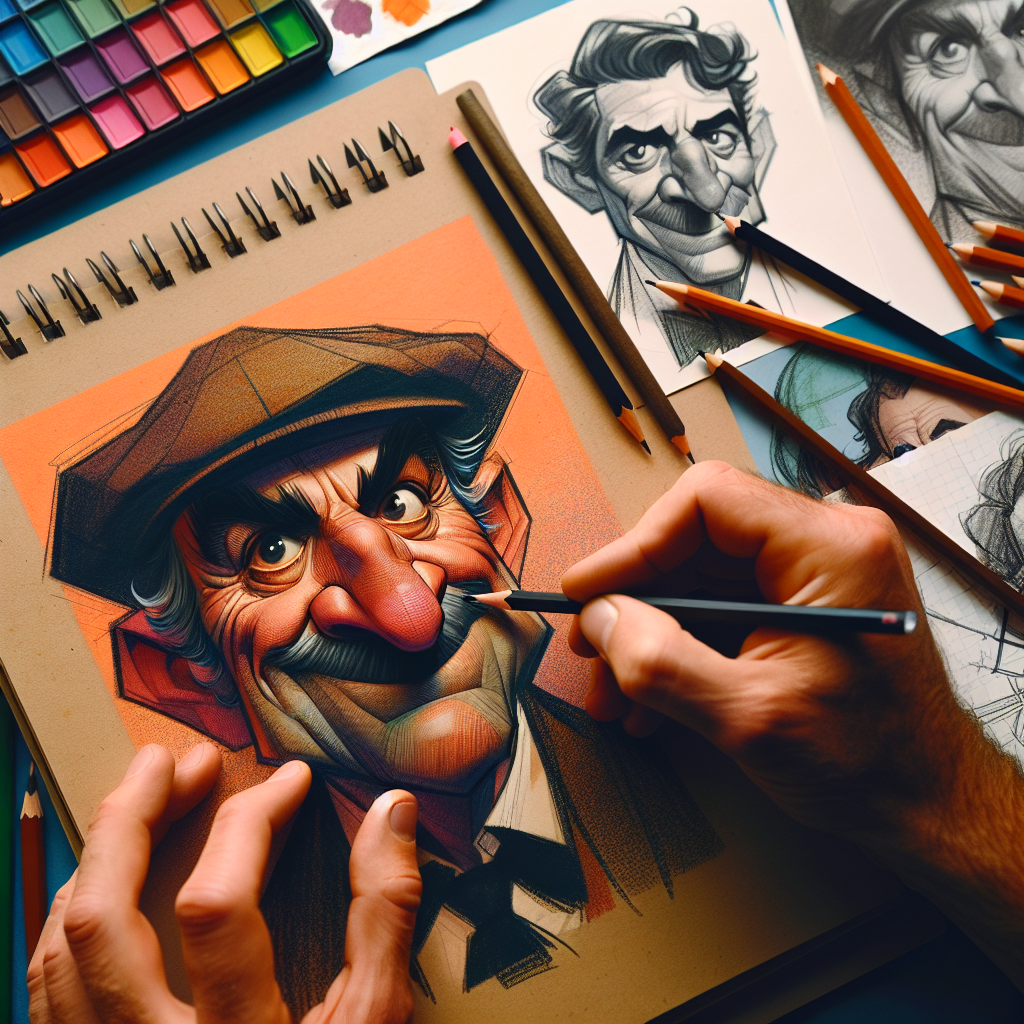
Caricatures have long held a special place in the realm of art and entertainment, offering playful, exaggerated depictions of individuals that reveal their personality, quirks, and charm. Whether seen at fairs, in editorial cartoons, or featured in gallery exhibitions, the art of caricature has evolved from mere satire to a sophisticated blend of technique and artistry. This article delves into the unique techniques that artists employ to create stunning caricatures while capturing the essence of their subjects.
Understanding the Essence of Caricature
At its core, caricature is about exaggeration without distortion. It highlights distinctive features—such as large noses, prominent chins, or expressive eyes—without completely misrepresenting the subject. The goal is to not only evoke laughter but also to create an emotional connection, presenting a version of reality that amplifies the subject’s character traits.
Techniques to Capture Character
1. Studying the Subject
Before putting pen to paper, the artist must thoroughly observe and understand the subject’s unique features and mannerisms. This involves more than just looking; it requires paying attention to the subtleties of expression, body language, and style. Artists often take photographs or sketch quick studies to capture various angles and expressions, ensuring they have a comprehensive understanding of the subject.
2. Exaggeration and Simplification
Once the observation phase is complete, the next step is to decide which features to exaggerate. Artists must carefully choose which attributes to amplify, ensuring they maintain a sense of likeness. The simplification of complex shapes into more basic forms is crucial, allowing the caricature to be more digestible and visually appealing. This technique strikes a balance between being faithful to the subject and creating a humorous rendition.
3. Playful Proportions
Proportions play a key role in caricature. Artists often manipulate proportions to create a more dynamic visual. For example, an oversized head on a tiny body might emphasize intellectual capabilities against a physical presence, or exaggerated facial expressions can convey a character’s emotional state. Such playful proportions add an engaging quality to the artwork.
4. Line Quality and Style
The medium—be it pencil, ink, or digital—affects the final outcome. The line quality can express energy and emotion; thicker lines might be used to emphasize certain features, while thinner lines lend softness to the piece. Each artist develops a unique style that reflects their individual approach to caricature, whether it’s through a cartoonish flair, realism, or abstract representations.
5. Color Usage
Color plays a critical role in caricature art. Vibrant colors may enhance the whimsical nature of a piece, while muted tones can evoke nostalgia or seriousness. Artists often use color strategically to highlight certain features or convey mood. Color palettes can significantly alter the perception of the caricature, providing depth and personality.
6. Expression and Gesture
Facial expressions and body language are vital components of a caricature. Capturing the essence of a smile, frown, or quirky gesture can breathe life into the artwork. Engaging the viewer requires portraying not just a likeness but also the feeling or emotion associated with the subject. This technique often involves exaggerating facial features to match the expression, creating a more dynamic representation.
The Intersection of Technology and Tradition
In recent years, technology has also transformed caricature creation. Digital tools allow artists to experiment with styles and techniques that were previously challenging. Software programs enable artists to manipulate images easily, test colors, and refine details before finalizing their work. However, traditional methods—such as hand-drawing with pens and brushes—still hold a revered place in the art form, with many artists blending both techniques to create their unique gig.
The Impact of Caricature
Caricatures serve multiple purposes beyond entertainment. They can comment on societal issues, challenge political figures, or celebrate cultural icons. By distilling complex ideas into accessible visuals, caricatures can provoke thought and instigate dialogue. The exaggeration often holds a mirror to society, encouraging audiences to reflect on the absurdities of life.
Conclusion
Capturing character through caricature is a multifaceted process that combines observation, creativity, and technique. The subtle balance between exaggeration and likeness, along with thoughtful consideration of proportions, expressions, and color, enables artists to produce stunning works that resonate with viewers. As caricature continues to evolve, blending traditional artistry with modern technology, it remains a playful yet profound form of expression that highlights the uniqueness of the human experience. Whether eliciting laughter or contemplation, the magic of caricature lies in its ability to capture the essence of character with charm and wit.

