In Q1, YouTube Music and Premium saw ‘largest quarterly increase’ in non-trial subscribers since 2018 launch, says Alphabet CEO, as platform’s quarterly ad revenues rose to $9.88B
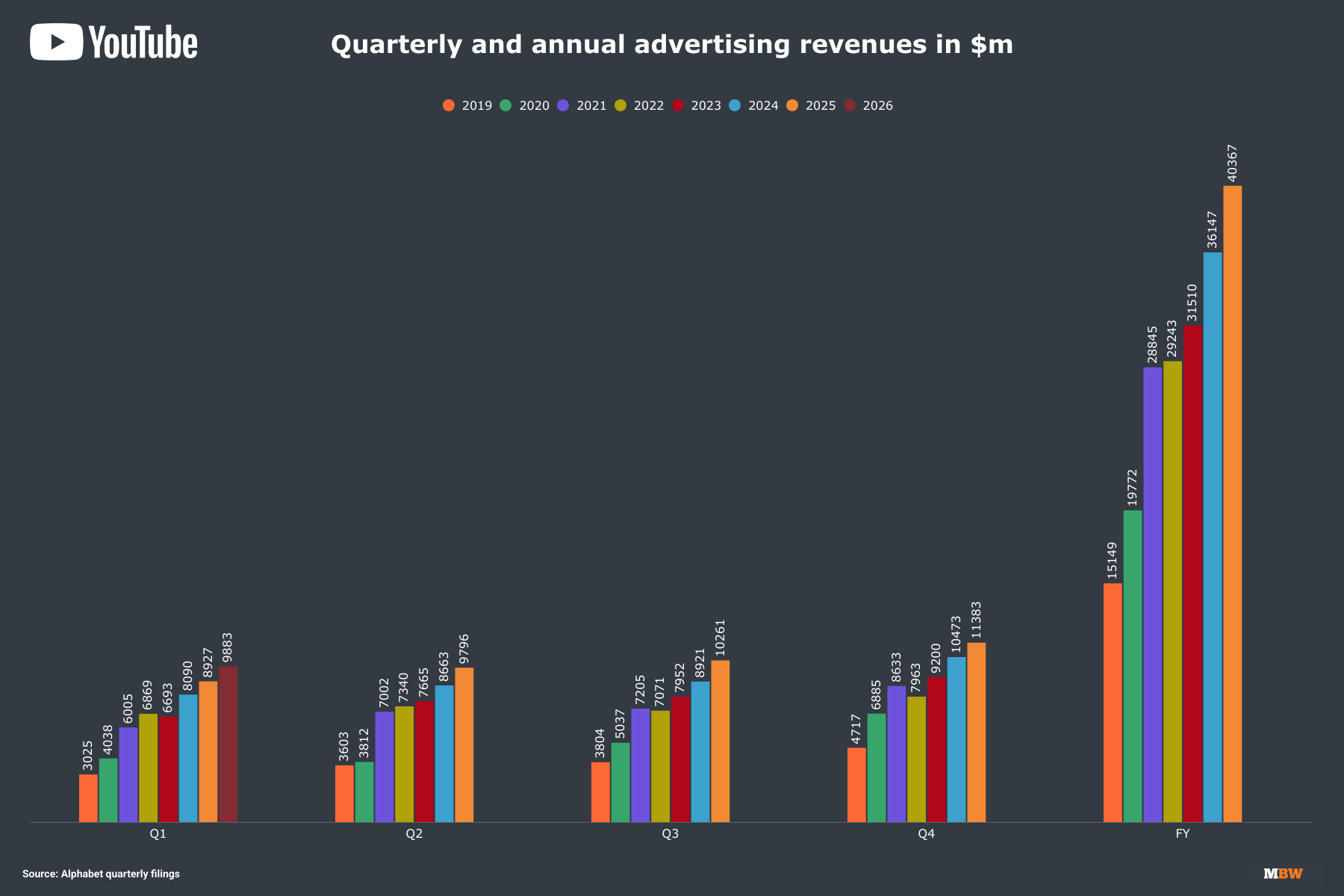
YouTube‘s advertising revenue grew 11% YoY to $9.88 billion in Q1 2026, up from $8.93 billion a year earlier, according to parent company Alphabet‘s earnings report published on Wednesday (April 29).
But on the earnings call, Alphabet Chief Business Officer Philipp Schindler signaled that YouTube‘s subscription business is gaining ground on its ad business, noting that “YouTube subscriptions revenue continues to grow faster than ads, particularly YouTube Music and Premium.”
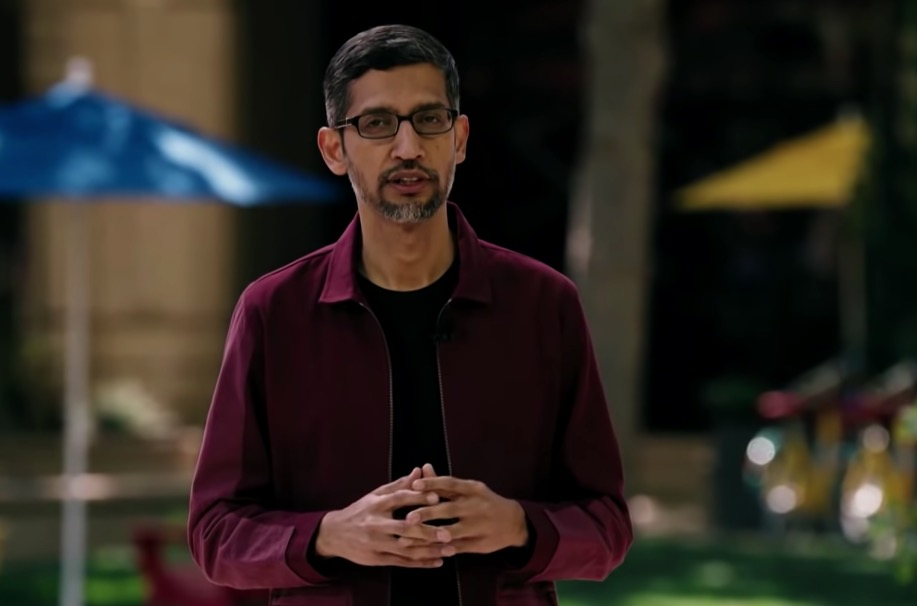
Alphabet Chief Executive Officer Sundar Pichai added that YouTube Music and Premium‘s Q1 performance represented a milestone for the platform’s subscription push.
“In Q1, our YouTube Music and Premium offering saw its largest quarterly increase in the total number of non-trial subscribers, both globally and in the U.S. since YouTube Premium launched in June 2018,” Pichai said.
YouTube/Google
“In Q1, our YouTube Music and Premium offering saw its largest quarterly increase in the total number of non-trial subscribers, both globally and in the U.S. since YouTube Premium launched in June 2018.”
Sundar Pichai
Alphabet does not disclose subscriber numbers for YouTube Music and Premium separately from its broader subscription total.
Across all of its services, Alphabet has reached a total of 350 million paid subscriptions. That’s up from the 325 million reported at the end of Q4 2025, and up by 80 million from the 270 million paying subscriptions reported in Q1 2025. Pichai noted that YouTube and Google One are the “key drivers.”
Alphabet‘s “Subscriptions, Platforms and Devices” segment — which includes YouTube subscriptions, Google One, the Play Store, and hardware — saw revenue jump 19% YoY to $12.4 billion from $10.4 billion.
Chief Financial Officer Anat Ashkenazi said this was “due to strong growth in both YouTube subscriptions, particularly in YouTube Music and Premium, and Google One subscriptions, which benefited from increased demand for AI plans.”
YouTube also recently raised its US subscription prices, increasing the cost of an individual YouTube Premium plan from $13.99 to $14.99 per month. The price hikes took effect for new subscribers on April 10.
Overall, Alphabet‘s Q1 revenues rose 22% YoY to $109.9 billion from $90.2 billion. The company said this marks the 11th consecutive quarter of double-digit growth.
Pichai said: “It was a terrific quarter for Alphabet… It’s clear that our AI investments and full-stack approach are driving performance across our business.”
The Google Services division, which includes YouTube, reported 16% YoY revenue growth to $89.6 billion, which the company attributed to the 19% YoY growth in “Google Search & other,” a 19% increase in revenue from Google subscriptions, platforms, and devices, and the 11% increase in YouTube ads revenue.
Schindler said the increase in YouTube ad revenue was driven by “direct response followed by brand.”
By the end of Q1, YouTube Premium Lite was fully launched in 23 countries, and Schindler said YouTube plans to launch the lower-cost tier in more than a dozen new countries in Q2.
Pichai noted during the call that revenue from products built on Alphabet‘s GenAI models grew nearly 800% YoY in Q1.
Alphabet outlined new AI tools to improve advertising quality. “AI is boosting our ability to deeply understand user intent for a given Search query and to find the most relevant ad. Even when we don’t have a direct user query, we’re making significant strides in improving relevance,” Schindler said.
In Q1 2026, YouTube’s advertising revenue reached $9.88 billion, reflecting an 11% year-over-year (YoY) growth from $8.93 billion in Q1 2025, as reported in Alphabet’s earnings statement released on April 29. During the earnings call, Philipp Schindler, Alphabet’s Chief Business Officer, indicated that YouTube’s subscription services are gaining momentum, particularly highlighting a faster growth rate for YouTube Music and YouTube Premium compared to its advertising revenue.
Sundar Pichai, Alphabet’s CEO, emphasized the significance of the subscription model’s performance, noting that YouTube Music and Premium achieved their largest quarterly increase in non-trial subscribers since their launch in June 2018. Although Alphabet does not break down subscriber numbers for YouTube Music and Premium separately, the overall subscriptions across Alphabet’s services have reached 350 million, up from 325 million at the end of Q4 2025 and significantly higher than the 270 million reported in Q1 2025. Pichai identified YouTube and Google One as crucial components driving this growth.
The segment encompassing subscriptions, platforms, and devices (including YouTube subscriptions, Google One, and the Play Store) reported a 19% YoY revenue increase, rising to $12.4 billion from $10.4 billion. Chief Financial Officer Anat Ashkenazi attributed this surge to strong growth in YouTube subscriptions, particularly YouTube Music and Premium, as well as increased demand for Google One subscriptions, which benefited from AI plan offerings.
Publicités
Publicités
Publicités
Publicités
In March 2025, Lyor Cohen, YouTube’s Global Head of Music, announced that YouTube Music and Premium had reached 125 million paid subscribers globally (including trials), representing an increase of 25 million in the past year, averaging about 2 million new subscribers monthly. Recently, YouTube also raised its subscription prices in the U.S., with individual YouTube Premium plans increasing from $13.99 to $14.99 per month for new subscribers starting April 10.
Overall, Alphabet’s Q1 revenues grew 22% YoY, amounting to $109.9 billion compared to $90.2 billion the previous year. This marks the 11th consecutive quarter of double-digit revenue growth. Pichai remarked on the positive performance, attributing it to the company’s investments in AI and a comprehensive business strategy.
The Google Services division, which includes YouTube, reported a 16% YoY revenue increase to $89.6 billion, credited to a 19% rise in revenue from « Google Search & other, » a similar increase in Google subscriptions, platforms, and devices, and the previously mentioned 11% growth in YouTube ad revenue. Schindler noted that the growth in YouTube ad revenue was primarily driven by direct response advertising, followed by brand advertising.
By the end of Q1, YouTube Premium Lite was fully launched in 23 countries, and plans were announced to introduce this lower-cost subscription tier to over a dozen additional countries in Q2. Pichai also highlighted that revenue from products utilizing Alphabet’s generative AI (GenAI) models grew almost 800% YoY in Q1.
Alphabet has also introduced new AI tools aimed at enhancing advertising quality. Schindler explained that AI is improving the understanding of user intent for search queries, thereby enabling more relevant advertising even without direct user queries. Additionally, YouTube has been implementing AI-driven updates, including the expansion of its AI likeness detection tool to the broader entertainment sector, allowing access to celebrities and talent agencies, following its initial limited rollout to select creators in October.
Overall, YouTube’s financial performance in Q1 2026 indicates a robust trajectory, with significant growth in both advertising and subscription revenues, underscored by a strategic pivot towards AI-enhanced services that aim to improve user engagement and advertising effectiveness.